Sex and Gender Dimension on EU proposals
September 1We have just published a short guide on how to address the gender dimension on EU proposals, you can find it here: https://doi.org/10.5281/zenodo.16929893 and a summary on it below:
Since the inception of Horizon Europe in 2020, one of the required elements for any EU proposal is the integration of the gender dimension into R&I content. This section is – unless otherwise specified in the call – mandatory, and will be assessed under the Excellence award criterion.
In AMIRES, we are actively paying attention to gender aspects, and we’re happy to advise you here on our website, as well as individually for any proposals we support. In addition, our gender equality board GEB is checking all proposals.
But what does the “integration of the gender dimension into R&I content” mean in practice, and how to write this section?
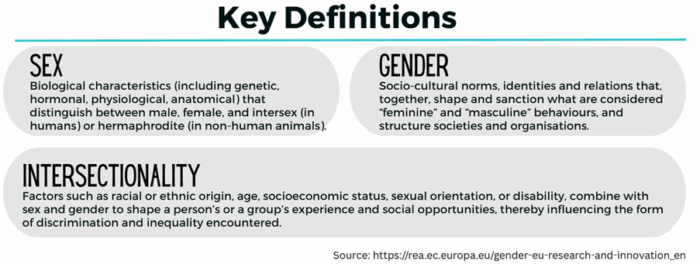
The gender dimension is more than gender balanced teams! In general, the “gender dimension in R&I” and “sex/gender analysis” are often as synonyms in EU policy on gender equality in R&I. Both refer to include gender considerations in research design, study implementation, scientific reporting, and general science communication.
What to do?
- Assess Gender Relevance: Examine how sex and gender influence the research topic and its context.
- Identify and Address Gaps: Acknowledge existing shortcomings and incorporate insights and identified gaps into the project concept.
- Integrate Gender in Project Planning: Ensure gender considerations are embedded in the planning and implementation of activities at all levels.
- Promote Inclusive Outcomes: Describe how project outcomes will be made accessible to all members of society, without discrimination based on personal characteristics.
- Highlight the Value of Gender Analysis: Clearly articulate how gender analysis enhances research quality and contributes to reducing inequalities across Europe.
- Engage Diverse Perspectives: Review this section with a diverse group to ensure multiple viewpoints are considered and represented.
If you want to learn more, check out our favourite resources on the topic:
- GENDER DIMENSION GUIDANCE FOR HORIZON EUROPE PROPOSALS
- Overview of Gender in EU research and innovation
- “Gendered Innovations” portal hosted by Stanford University
- EU Report “Gendered innovations 2: How inclusive analysis contributes to research and innovation”
- EU’s Gender equality strategy
- European Institute for Gender Equality
Stay tuned with AMIRES and our services, visiting our website!