Flexible Printed Electronics: How ECOTRON Is Tackling Europe’s E-Waste Problem
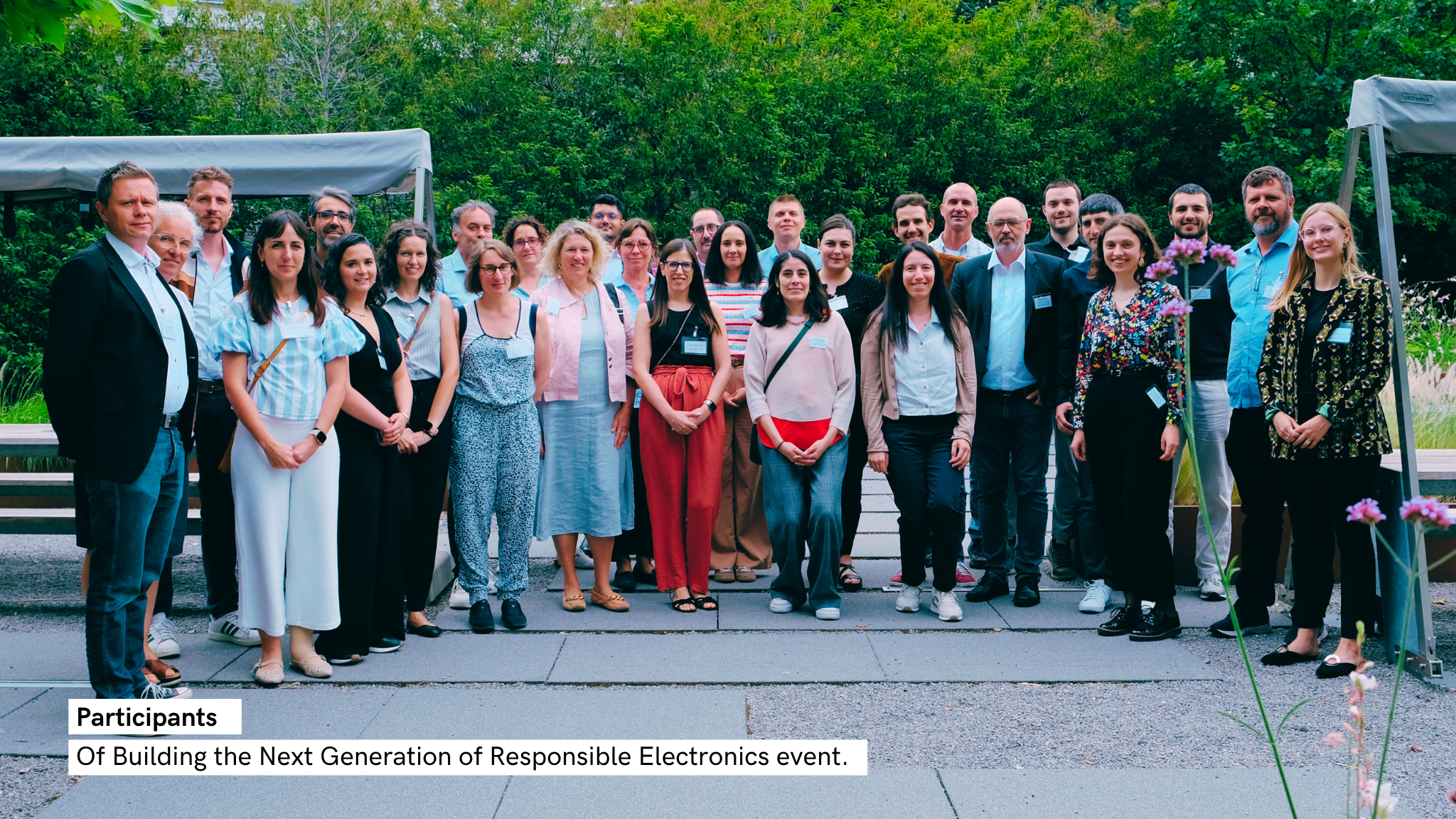
July 23Global electronic waste now exceeds 60 million tonnes a year, and less than a quarter of it is recycled safely, largely because conventional circuit boards resist separation. Flexible printed electronics offer a way out of that problem, and on 1 July 2026, the EU-funded ECOTRON project closed four years of work developing exactly that alternative. The consortium marked its conclusion at a joint final event, “Building the Next Generation of Responsible Electronics”, in Brussels. You can also check the full event agenda.
Rethinking the Circuit Board with Flexible Printed Electronics
Instead of etching circuits from solid substrates, printed electronics deposit conductive ink only where a circuit is needed, cutting raw material use and waste. ECOTRON developed flexible, organic and printed electronics on renewable, sometimes compostable, materials for medical devices, wearables and IoT applications.
At the Brussels event, the consortium presented data showing that switching to flexible printed electronics can cut associated carbon emissions by up to 50% compared with conventional manufacturing, one of the clearest efficiency arguments yet for the technology’s shift from lab to industry.

A European Policy Moment for Printed Electronics
The timing matters: the EU’s Circular Economy Action Plan and the upcoming Right to Repair Directive are placing new design constraints on electronics manufacturers. ECOTRON’s emissions data is among the first quantified signs that flexible printed electronics can meet these constraints without sacrificing manufacturing scalability.
Closing Together, Across Four Projects
ECOTRON marked the milestone alongside three fellow Horizon Europe projects: SUINK (self-charging sensors for smart mobility), HyPELignum (wood-based substrates for net-zero manufacturing), and CircEl-Paper (fully recyclable, paper-based electronics). The day combined project results, a hands-on demonstrators’ session, and a panel on scaling green electronics from lab to market.
Three themes recurred throughout the day:
- Standards must lead the market, not follow it.
- Europe’s real competitive edge is circularity, not just cost.
- Production capacity and consumer trust, as much as cost, will decide whether flexible printed electronics can compete at scale.
AMIRES’ Role in Bringing Flexible Printed Electronics to Market
As the partner responsible for ECOTRON’s management and dissemination, AMIRES steered the consortium through four years of coordination and is now carrying these results toward the policymakers and manufacturers positioned to act on them. This is part of AMIRES’ wider role connecting EU-funded research projects to real-world industrial and policy impact.
Thank you to everyone who contributed to ECOTRON, and to everyone who joined us, in Brussels and online, to close this chapter together.
