Clean Fuel Horizons: Exploring the Next Generation of Sustainable Fuel Solutions
Join us for a full-day, free-of-charge workshop exploring the realities of sustainable fuels – from breakthrough innovations to practical challenges in deployment and market adoption.
This event will bring together leading experts from industry, academia, policy, and research to exchange knowledge, share experiences, and discuss the latest developments shaping the future of clean and low-carbon energy solutions.
The programme includes:
· Engineering, materials, and system solutions for hydrogen production, storage, and distribution
· Industrial integration and real-world applications of hydrogen across sectors
· Renewable fuels and bio-based chemical solutions for aviation, shipping, and industry
· Innovative technologies for energy transition and sustainable chemical processes
· Knowledge exchange and networking to foster collaboration between research, industry, and policy
Get inspired by real-world examples of sustainable fuel innovations, cutting-edge research, and scalable clean energy solutions. Whether you're in R&D, policy, academia, or industry, this is your opportunity to engage in a dialogue on what’s next in accelerating the transition to low-carbon energy systems.
Powered by TRIATHLON and ALGAESOL
Agenda
Meeting introduction & agenda by AMIRES
Keynote speech:
Addressing the challenges of clean energy production
- Petr Mervart (Plenipotentiary of the Minister of Industry and Trade for Hydrogen Technologies)
EU Hydrogen: Aligning Policy and Ambition with Decarbonisation Reality
- Jack Gomersall (Senior Manager, Industrial Innovation Europe, Clean Air Task Force)
Multi-state hydrogen fuel systems for aviation – Storage, transport and conditioning
- Julien van Campen (Asistant Professor, Technische Universiteit Delft (TU Delft)
Modular electrolyzers – custom hydrogen production
Combined Electron Beam and Plasma Processes for Scaled Hydrogen Technology
- Burkhard Zimmermann (Head of Electron Beam Department, Fraunhofer FEP)
Type V storage tanks for cryo-compressed hydrogen – challenges for material development
- Christoph Ebert (Head of Testing Methods and Material Models, Institute of Lightweight Engineering and Polymer Technologies (TU Dresden)
Creating Conditions for Hydrogen Development: The Role of HYTEP
- Martin Křemenák (Executive Director, Czech Hydrogen Technology Platform (HYTEP)
Hydrogen storage specifics
- Tomáš Diósi (COO, Gas Storage CZ)
Hydrogen Co-Firing: Bridging the Gap to Net Zero
- Igor Hudák (R&D engineer and associate professor, Brno University of Technology)
Legacy landscapes, local fuels – Post-mining areas as a strategic feedstock reserve in Central Europe
- Kateřina Svobodová (Head of the Department of Science and Research, VUHU)
Solar‑Driven and Stand‑Alone Bioelectrochemical Technologies for Sustainable Transport Fuels production
- Eduard Borràs (Area Manager, LEITAT Technological Center)
Catalysis for renewable fuels and bio-based chemical solutions
- David Kubička (Professor and Research Scientist, University of Chemistry and Technology Prague)
Guiding Sustainable Fuel Development Through Early-Stage Life Cycle Assessment
- Ylva Katarina Wedmark (Researcher, NORCE Norwegian Research Center)
Advanced biofuels production from energy crops under renewable energy directive
- Vicente Bernal (Senior Scientist, Repsol)
Speakers
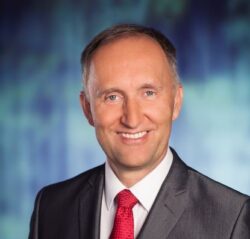
Petr Mervart is currently overseeing the development, evolution, and execution of the Czech Hydrogen Strategy within the Ministry of Industry and Trade. He has actively contributed to the formulation of a comprehensive study on decarbonizing the Czech industry. Before assuming his role at the ministry, he amassed a wealth of professional experience across multiple international organizations, primarily in the energy and IT sectors. His journey in the professional world commenced as a university teacher and research scientist at the Faculty of Mechanical Engineering at the Czech Technical University. Furthermore, he has actively engaged in university research endeavours in both Japan and Canada, broadening his global perspective on key industry-related matters.
Jack Gomersall works to support the implementation of climate and energy policy to drive real progress in industry decarbonisation across Europe. He has extensive experience developing hydrogen, CCS and CDR projects across technical, commercial and project management roles. He has worked on large-scale hydrogen projects in the UK spanning both natural gas reformation with CCS and electrolytic hydrogen production, giving him a grounded understanding of the practical and commercial realities facing the sector. He now brings that project experience to bear in his policy work at CATF, focusing on how smart regulation and effective policy design can accelerate the decarbonisation of industry and the role hydrogen can play within that — with a particular focus on the European policy landscape.
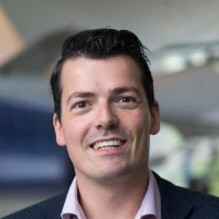
Dr. ir. Julien van Campen is an Assistant Professor of Aerospace Engineering at TU Delft, specializing in composite structures for hydrogen storage and sustainable aviation. He is the technical coordinator of the Horizon Europe project TRIATHLON. He holds a PhD from TU Delft and previously worked as a development engineer at Daimler AG at TANIQ B.V, where he worked on where he worked on design and optimization of composite structures and development of advanced filament winding technology respectively. Next to his academic work, Julien is also the chairperson of TrueU, the LGBTIQ+ Employee Resource Group of the TU Delft.
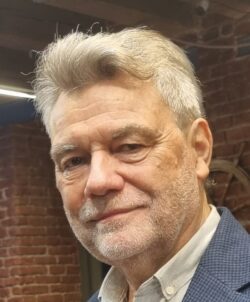
Professor Vladimír Matolín is a Czech physicist specializing in surface physics, educated at Charles University and University of Aix-Marseille III. After earning his PhD in Prague and a Doctor of Sciences degree, he built a long academic career at Charles University, where he served as professor at the Faculty of Mathematics and Physics for over two decades while also holding international roles, including appointments in France and collaborations with institutions such as the National Institute for Materials Science in Japan. His work has been widely recognized with honors including the French distinction Chevalier dans l’Ordre des Palmes Académiques and multiple honorary doctorates. In recent years, he has transitioned into leadership in applied research and innovation, serving as CEO and partner in companies focused on hydrogen and electrolysis technologies. Author of hundreds of scientific publications with significant citation impact, Professor Matolín has also contributed to major European research initiatives and infrastructure projects in materials science.
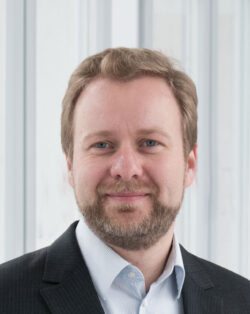
Dr. Burkhard Zimmermann received the diploma and Ph.D. degrees in physics from the University of Technology Dresden in 2008 and 2012, respectively. Since 2008, he has been working at Fraunhofer FEP on development and industry transfer of plasma as well as electron beam (EB) sources, systems and technologies. Since 2022 he is leading the department “Electron Beam”, and since 2023 he is acting as the deputy institute director at Fraunhofer FEP. His research areas include thermal and non-thermal EB technologies to make use of physical, biological, and chemical effects of accelerated electrons in matter, e.g. plasma- activated PVD and CVD for coatings as well as novel EB-based processes for the treatment of surfaces, liquids, and gases.
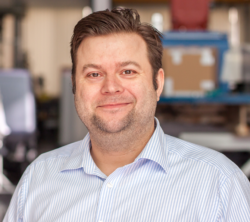
Dr.-Ing. Christoph Ebert has been working in the field of developing innovative and customized testing methods for more than 20 years. His main areas of expertise include rotor testing, crash and impact testing, as well as system testing. He leads the “Testing Methods and Material Models” research group at the Institute of Lightweight Engineering and Polymer Technology (ILK) at TU Dresden. In recent years, his research has focused on the aging and degradation of polymers, especially under hydrogen and cryo-hydrogen atmospheres.
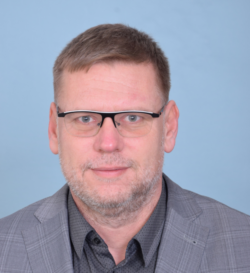
Martin Křemenák received his degree from the University of Chemistry and Technology, Prague, Faculty of Chemical Technology, Polymer Institute. He has over 20 years of experience in the chemical and energy sectors, focusing on strategic and decarbonization projects. From 2023 to 2025, he served as vice-chairman of ORLEN UniCRE, leading R&D strategy and biofuel projects and overseeing the transformation of the organization into a commercial entity followed by its merger with the parent company ORLEN Unipetrol. Since February 2026, he is the executive director of HYTEP, where he aims to leverage the platform’s unique position to connect industry leaders, research institutions, and public administration. As HYTEP’s director, he is focused on transforming this collaboration into concrete projects and accelerating the deployment of hydrogen technologies in real-world operations, viewing hydrogen as a key pillar of the Czech economy’s future competitiveness and energy security. As a member of the Board of the Regional Chamber of Commerce of the Ústí Region and the District Chamber of Commerce Most, and as Chairman of the Czech Technology Platform for Bioeconomy (CTP Bio), he understands the needs of industry, academia, and regulatory authorities, and is able to effectively facilitate dialogue between government and the business sector.
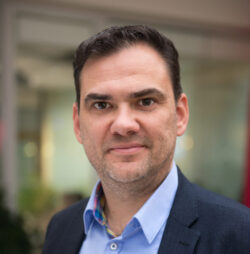
Mr. Tomas Diosi graduated and completed postgraduate studies from the Faculty of Electrical Engineering at the University of Zilina and completed studies at the Technical University of Kosice. Since 2006 he has worked at Gas Storage CZ, where he has held various positions in the areas of operations, investments and development. Since 2015 he has managed the operation of underground gas storage facilities as Head of Asset Operations, since last year as COO in Board of Directors. Gas Storage CZ operates a total of 6 underground gas storage facilities in the Czech Republic, of which 4 are depleted fields, 1 aquifer and 1 rock cavern. With a total volume of 2.7 billion m3, Gas Storage CZ is the biggest operator of gas storage capacity in the Czech Republic, with storage facilities capable of covering up to one third of the annual gas consumption of the Czech Republic. Currently, the company is also developing other activities, especially in preparation for the use of hydrogen in the gas system
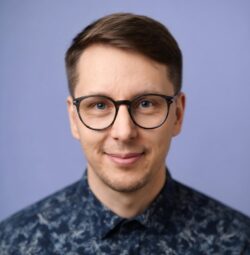
Igor Hudák is an R&D Engineer and Researcher at Brno University of Technology, Institute of Process Engineering. He leads the only specialized experimental burner development laboratory in the Czech Republic, where he focuses on decarbonization technologies and low-emission combustion systems. With over ten years of experience, Igor collaborates closely with industrial partners and refineries to develop practical solutions that significantly reduce NOx and CO emissions while maintaining high energy efficiency. His work includes the design and optimization of refinery and heating plants burners and alternative fuel systems, including hydrogen, turning laboratory research into real-world applications for cleaner industrial energy production.
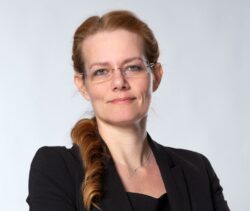
Kateřina Svobodová is Head of the Department of Science and Research at VUHU, Czech Republic, where she develops and coordinates national and international R&D projects on the rehabilitation and strategic re-use of post-mining areas. Trained in both applied ecology and fuel technology, she is currently completing her PhD at the Czech University of Life Sciences Prague on the pretreatment and processing of crude waste oils and fats for fuel and energy applications. Before joining VUHU, she spent over seven years at ORLEN UniCRE and ORLEN Unipetrol, leading the Department of Biofuels and Hydrogen Technologies and serving as principal investigator of impactful national R&D projects on used cooking oil valorisation, which delivered the first comprehensive pilot UCO collection at selected ORLEN service stations in the Czech Republic. Her current work bridges this background in alternative feedstocks with the unique potential of Central European post-mining landscapes, repositioning them as a strategic resource that supports regional resilience, domestic raw material availability and energy self-sufficiency in the post-coal era.
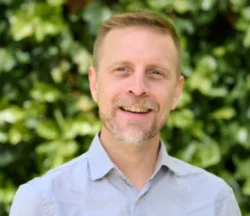
Eduard Borràs Camps holds a degree in Environmental Sciences (2005) and a PhD in Environmental Science and Technology (2011) from the Autonomous University of Barcelona. His research experience has focused on environmental biotechnology in projects related to bioremediation, waste valorization, and bioelectrochemical systems (BES). He was a visiting researcher at the Environmental Biotechnology Laboratory of the Institute of Microbiology of the Academy of Sciences of the Czech Republic. His recent professional career has focused on the execution and management of projects for energy production (biogas and hydrogen), CO₂ conversion, nutrient recovery, pollutant removal, and drinking water production in various international and national R&D projects. In addition, he has participated in several conferences and published more than 30 peer-reviewed articles in international journals and book chapters. He has been an assistant and associate professor at the Department of Chemical Engineering at the Autonomous University of Barcelona and an associate professor at the Polytechnic University of Catalonia. He currently works as an Area Manager in the Bioelectrochemical Technologies Area in the Circular Economy and Decarbonization Department of Leitat. He is a member of the International Society for Microbial Electrochemistry and Technology (ISMET) and a representative of Leitat at the CO₂ Value Europe platform.
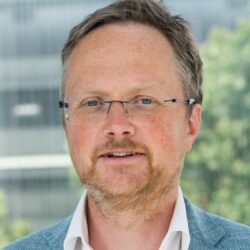
David holds a PhD degree from Abo Akademi, Turku, Finland and he is a full-professor at the University of Chemistry and Technology Prague, Czechia, at the Department of Sustainable Fuels and Green Chemistry, where he leads the GreenCats research group (https://greencats.vscht.cz/). Currently, he is the president of the European Federation of Catalysis Societies (EFCATS).
His research is focused on the development of heterogeneous catalysts for efficient transformation of biomass-derived feedstocks into sustainable advanced biofuel components and novel bio-monomers. In his research, he focuses on designing catalysts in line with the Green chemistry principles and on unraveling the relationships between catalyst composition and properties, and its activity and selectivity. David has co-authored >120 papers in peer reviewed journals that have been cited >6000-times.
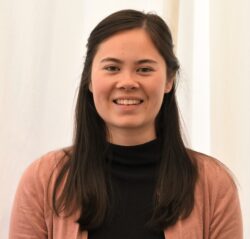
Ylva K. Wedmark is a Researcher at NORCE Research working in the Marine Biotechnology group. Holding an MSc in Chemistry and Biotechnology from the Norwegian University of Life Sciences, she has expanded her expertise into sustainability assessments and life cycle analysis in her current research position. Her work focuses on evaluating the environmental and economic sustainability of bio-based product networks, working closely with emerging regional industry. In ALGAESOL, she leads the task on sustainability analysis, conducting life cycle assessments to quantify the environmental footprint and economic performance of solar-powered and bio-based value chains, with the aim of identifying pathways toward more sustainable and commercially viable production systems.
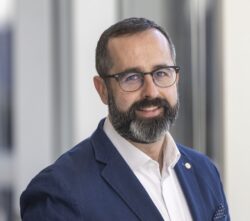
Vicente Bernal is a Senior Scientist with over 20 years of experience in the field of biotechnology. He holds both academic and industrial backgrounds. He started his career in the academy (Universidade Nova de Lisboa, Portugal, and University of Murcia, Spain). In 2012, Vicente joined REPSOL’s Technology Division, where he has kept on contributing to date to the development, evaluation, and deployment of biotechnological conversion processes aligned with the energy transition.
Venue
Hotel Diplomat
Evropská 15
16041 Prague
Czechia
Contacts
For more information please feel free to contact AMIRES Energy & Sustainability team: